Motion Football SVG: A Designer’s Real-World Embroidery Review
First Impressions: Energetic, Clean, and Surprisingly Versatile
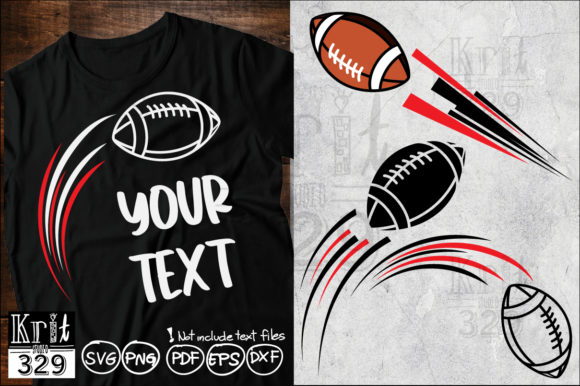
When I opened the Motion Football SVG file, my first thought wasn’t “football fan gear”—it was “this has real project legs.” The design leans into motion with subtle directional lines, a slightly tilted football shape, and clean outer contours that suggest speed without visual clutter. It’s not overly detailed—no tiny laces or exaggerated shading—but that’s exactly why it works so well for embroidery. As a designer who tests dozens of graphics weekly for client apparel and boutique merchandise, I immediately saw how this could translate to stitch: balanced negative space, clear silhouette, and a confident, playful energy that reads well at 3”–4” wide.
Where It Shines: Real Projects That Actually Sell
Last week, I used Motion Football SVG to embroider a set of cotton canvas tote bags for a local youth sports camp. We paired it with navy thread on light heather grey fabric—and it popped. Not flashy, but *present*. Customers didn’t just grab one; they asked for matching sweatshirt versions. That’s the sign of a design that supports intention—not just decoration. It performed equally well as a centered chest motif on unisex crewnecks, a small left-chest accent on baby onesies (scaled down to 2.2”), and even as a layered applique patch on denim aprons for a craft fair vendor.
For Etsy sellers and small shop owners, Motion Football SVG fits neatly into seasonal and evergreen niches: back-to-school spirit wear, birthday party favors (think embroidered tea towels or pillow covers), holiday gifts for coaches or young athletes, and even subtle nursery decor—especially when stitched in soft pastel threads on organic cotton blankets. Its graphic simplicity means it holds up in printable mockups too, which helps buyers visualize before purchasing your finished product.
Where to Pause—Not Every Fabric or Fit Is Equal
That said, Motion Football SVG isn’t magic. On textured fabrics like terry cloth or heavy fleece, the outer edges softened noticeably—even with medium cutaway stabilizer. On stretchy performance knits? I recommend testing with a lightweight tear-away and reducing density by 10–15% in fill areas. And while the design avoids fine interior details, the curved outer contour can blur on dark, napped fabrics (like black velour) unless you use high-contrast thread and add an underlay stitch pass.
I also wouldn’t push it below 1.8” wide on caps or curved surfaces—there’s just enough line weight to hold definition, but going smaller sacrifices legibility. Likewise, avoid placing it near seams, darts, or tight corners on garments where fabric distortion might pull stitches out of alignment. For baby embroidery or items meant for frequent washing, double-check that your satin stitch edges are smooth and fully encapsulated—no exposed raw edges hiding in the vector paths.
Design Integrity Meets Customer Trust
What makes Motion Football SVG stand out isn’t novelty—it’s reliability. When customers see a clean, confidently stitched football motif on their custom apparel, they don’t think “SVG file.” They think “this maker knows what they’re doing.” That perception matters—especially for craft businesses building repeat buyers. Unlike over-rendered digital graphics that look great on screen but fall apart in thread, this design respects embroidery’s physical limits. There’s no excessive layering, no micro-detail that vanishes after the first wash, and no confusing overlapping paths that trip up auto-digitizing software.
It also supports brand consistency. Whether you’re stitching it solo on a home machine or scaling it across 50 units for a school fundraiser, Motion Football SVG maintains its voice—sporty but refined, spirited but not childish. That balance is rare in Crafts category Graphics, and it directly impacts giftability and buyer engagement. People keep embroidered items longer when the design feels intentional, not decorative filler.
Practical Designer Notes Before You Stitch
- Always test first: Run Motion Football SVG on scrap fabric matching your final substrate—same stabilizer, same thread, same hoop size.
- Check contrast early: View it in black-and-white mockups on both light and dark backgrounds. Does the shape still read clearly?
- Review stitch density: If digitizing yourself or using auto-conversion tools, watch for dense fill zones—adjust if needed for breathability on baby clothes or summer tees.
- Confirm licensing: Since Motion Football SVG is marketed for DIY and handmade use, verify whether commercial embroidery rights (e.g., selling stitched patches or wholesale apparel) are included before listing on Etsy or at craft fairs.
- Stabilizer strategy: Use cutaway for stable wovens (totes, tea towels), lightweight tear-away for knits, and fusible + tear-away combo for delicate baby fabrics.
- Thread colors matter more than you think: Navy on charcoal reads stronger than black on black—even with high-density satin stitch.
A Final Thought: Design That Serves the Maker
Motion Football SVG doesn’t try to be everything. It’s not a full scene, a monogram builder, or a multi-layered applique system. It’s one strong, adaptable idea—executed with restraint. That’s why it works so well across embroidery projects: from a single-stitch running-stitch outline on a linen kitchen towel to a bold satin-stitched centerpiece on a varsity-style jacket. For designers, small business owners, and makers who value clarity over clutter, this is the kind of Graphics asset that earns repeat use—not just once, but across seasons, products, and customers. It’s proof that sometimes, the most useful design isn’t the most complex—it’s the one that stitches true, sells steadily, and makes your handmade product feel unmistakably yours.